How to Improve Matric Marks After Passing in 2026
You passed. But the grade doesn’t reflect what you actually know — and now it’s sitting on the transcript colleges will judge you by. This is the exact situation the improvement exam exists for.
Quick answer: If you passed your 10th class exam under any Punjab board, you can reappear in specific subjects to raise your marks — without your original pass being cancelled. You get four attempts spread across four years, but only two years if you don’t want to file an affidavit, and you cannot join 11th class while you’re using this window.
Everything below explains exactly how that works, subject by subject, so you don’t apply blind.
Who Can Actually Reappear
Improvement is only for students who passed. If you failed one or more subjects, that’s a supplementary case, not improvement — the rules, the deadlines, and the application form are completely different.
Two conditions decide your eligibility:
- You passed your 10th class annual (or supplementary) exam under a Punjab BISE board.
- You have not yet appeared in or passed a higher public examination — meaning 11th class (HSSC-I) or any equivalent qualification — using this result.
That second point trips people up. If you’ve already sat your 11th class papers, you lose the right to improve your 10th class result. The board treats “moving forward academically” and “reappearing to improve the past result” as mutually exclusive during this window.
One thing worth saying plainly: improvement isn’t only for students with D or E grades. Students with A and A-1 grades reappear too — usually in one subject that’s pulling down an otherwise strong aggregate, because medical and engineering merit lists in Pakistan are decided by fractions of a percent.
How Many Chances You Get, and What They Cost You
Under the current PBCC-approved policy, you get four examination opportunities to improve your result.
| Timeframe | Requirement |
|---|---|
| Within 2 years of passing | No extra paperwork — apply directly |
| Between 2 and 4 years of passing | Affidavit required, confirming you haven’t obtained a higher qualification in the meantime |
| After 4 years | Window closes — no further improvement attempts allowed |
A few operational details that decide whether an attempt is “used up”:
- Once you physically sit the paper, that attempt is consumed — even if you don’t clear the improvement target. There’s no refund on chances.
- If you apply but stay absent, your existing result stands untouched, and — depending on the board’s current-year notification — the attempt may or may not count against your total. Confirm this with your board before skipping a scheduled paper.
- You cannot use grace marks in an improvement attempt. If a subject originally passed with the help of grace marks, you must clear it on merit this time.
Which Subjects and Parts You’re Allowed to Improve
This is where most students get confused, because the board doesn’t make you retake everything.
You can appear in any one of these categories:
- A full subject of your choice — theory (Part-I and Part-II) plus practical, where applicable.
- Part-I only of a subject.
- Part-II only of a subject.
- Both Part-I and Part-II, without the practical.
- Individual paper(s) within a subject group, as defined by your board’s current scheme.
So if your Chemistry Part-I score is the only thing dragging your percentage down, you sit Chemistry Part-I alone — not the full subject, not other subjects you already did fine in.
The catch: you can only improve subjects or subject groups you already appeared in and passed. You cannot switch to a subject you never studied, and you cannot use improvement to add a new elective. The paper you sit follows the current syllabus in force that year, not the syllabus you originally studied — so if the course content has changed since you passed, you’re tested on the updated version.
What Happens to Your Marks — The Part No One Explains Clearly
This is the actual mechanism, and it’s simpler than most explanations make it sound:
- The board compares your original marks against your new improvement marks, subject by subject.
- Whichever is higher gets counted in your final record.
- If you score lower in the improvement attempt than you did originally, your original marks are retained — you don’t lose ground.
- Your aggregate, division, and grade are then recalculated based on this best-of-both-attempts total.
In other words, improvement is a one-way upgrade path. The risk isn’t losing marks — the risk is spending an attempt, a fee, and study time for zero gain if you don’t actually improve.
Does It Affect Your Original Certificate?
Here’s the part students genuinely worry about, and the honest answer has three parts.
Your original certificate does not become invalid. Passing is passing. The board doesn’t cancel or reissue a fresh certificate identity just because you attempted improvement — your original SSC certificate remains a valid, recognised document throughout.
What does change is your marksheet. Once your improvement result is finalised, the board issues a revised/updated marksheet reflecting the higher marks in the subject(s) you improved. This updated marksheet — not the original one — becomes the version you should submit for admissions or verification going forward, since it carries your final, best-of-both marks.
The number of attempts you’ve used gets recorded on your result record. This isn’t a black mark against you — colleges and universities in Pakistan don’t penalise students for using improvement chances — but it does mean the board keeps a visible trail of how many times you reappeared.
If your certificate is ever questioned during admission or job verification, the revised marksheet plus your original result gazette entry together confirm the full picture — this is why keeping both documents, not just one, matters.
Improvement vs Supplementary — Don’t Confuse the Two
These get mixed up constantly, and applying under the wrong category wastes your attempt.
| Improvement Exam | Supplementary Exam | |
|---|---|---|
| Who applies | Students who passed and want higher marks | Students who failed one or more subjects |
| Purpose | Raise an existing pass to a better grade | Clear a subject you didn’t pass |
| Marks rule | Higher of the two attempts is kept | New result simply replaces the fail status |
| Certificate impact | Original certificate stays valid; marksheet updated | Certificate issued only after clearing the failed subject |
| Timing | Roughly 3–4 months after the annual result, subject to board notification | Typically 2–3 months after the annual result |
If you failed a subject rather than wanting to raise a pass, the improvement process described in this article doesn’t apply to you — you’re looking at the supplementary route instead.
Restrictions You Need to Know Before You Apply
- No admission to 11th class or any higher program while you’re actively using an improvement chance for that academic year. Boards treat improvement and forward academic progress as sequential, not parallel — you finish one before starting the other for that particular result.
- The affidavit requirement is not optional once you’re past the two-year mark. Applications submitted without it, when required, get rejected at the scrutiny stage — not refunded quietly, rejected.
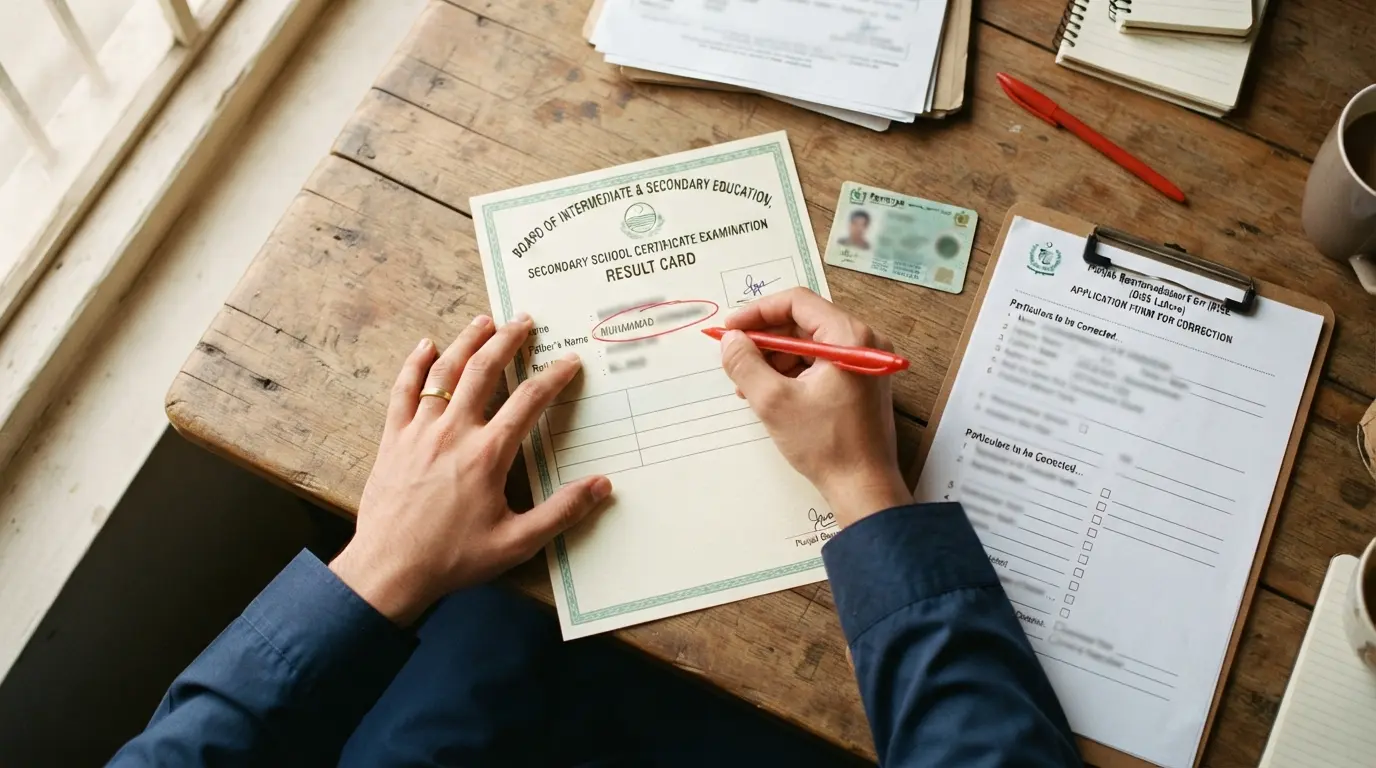
- You can’t mix improvement with a name or father’s-name correction request in the same application. Those are separate processes with separate forms.
How and When to Apply
Applications open through your board’s official website, typically a few months after the annual result is finalized, with a separate, later exam date for the improvement papers themselves — usually in the November–December window, though each board confirms its own dates through an official notification closer to the time.
The fee is charged per subject or per part, and it is revised almost every academic year — do not rely on a number quoted in an old blog post or forum thread. Check the current fee directly on your board’s online challan portal before you pay, since applying with an outdated fee amount is one of the most common reasons forms get stuck at the verification stage.
Is It Actually Worth Attempting?
This depends on what the improved marks are for.
- If you’re aiming for MBBS, BDS, or an engineering merit list, even a 2–3% jump in one weak subject can move you several hundred places on a provincial merit list. For these students, improvement is usually worth the fee and the months of preparation.
- If your grade already clears the cutoff for your intended program, and you’re not chasing a scholarship or a specific merit threshold, the time might be better spent preparing for 11th class instead — since you can’t do both at once.
- If you’re one subject away from a full-division upgrade (say, moving from a B to an A aggregate), that single subject is usually the highest-value target — check which paper is actually pulling your average down before you apply broadly.
There’s no universal right answer here. It’s a calculation specific to your marks, your target program, and how much of the improvement window you still have left.
Frequently Asked Questions
Can a student with an A-1 grade still apply for improvement?
Yes. Improvement isn’t restricted to failing or low grades — students with high grades apply too, usually to strengthen one weak subject for a competitive merit list.
Will my original SSC certificate be cancelled if I attempt improvement?
No. Your original certificate remains valid. Only your marksheet gets updated to reflect the higher of your original and improved marks.
Can I improve a subject I never studied originally?
No. You can only reappear in a subject, subject group, or part that you already appeared in and passed.
What if I score lower in the improvement exam than my original attempt?
Your original, higher marks are retained automatically. You do not lose marks by attempting improvement.
Can I join 11th class while my improvement result is pending?
No. Boards require you to complete your improvement attempt for a result before taking admission based on that same result in a higher class.
Do I need an affidavit every time I apply for improvement?
Only if you’re applying more than two years after your original pass. Within the first two years, no affidavit is required.