How Practical Marks Are Added Into Your Matric Total
Every year on result day, thousands of students open their marksheet, look at a science subject, and think the board made a mistake. Physics shows 78 marks — but the written paper was only out of 60. Nothing went wrong. The extra marks came from your practical, and the board added them into the same subject total. This guide explains the exact theory vs practical split for every science subject under the nine Punjab BISE boards, so your 10th class result 2026 makes complete sense the moment you see it.
Theory vs Practical Split — Subject by Subject
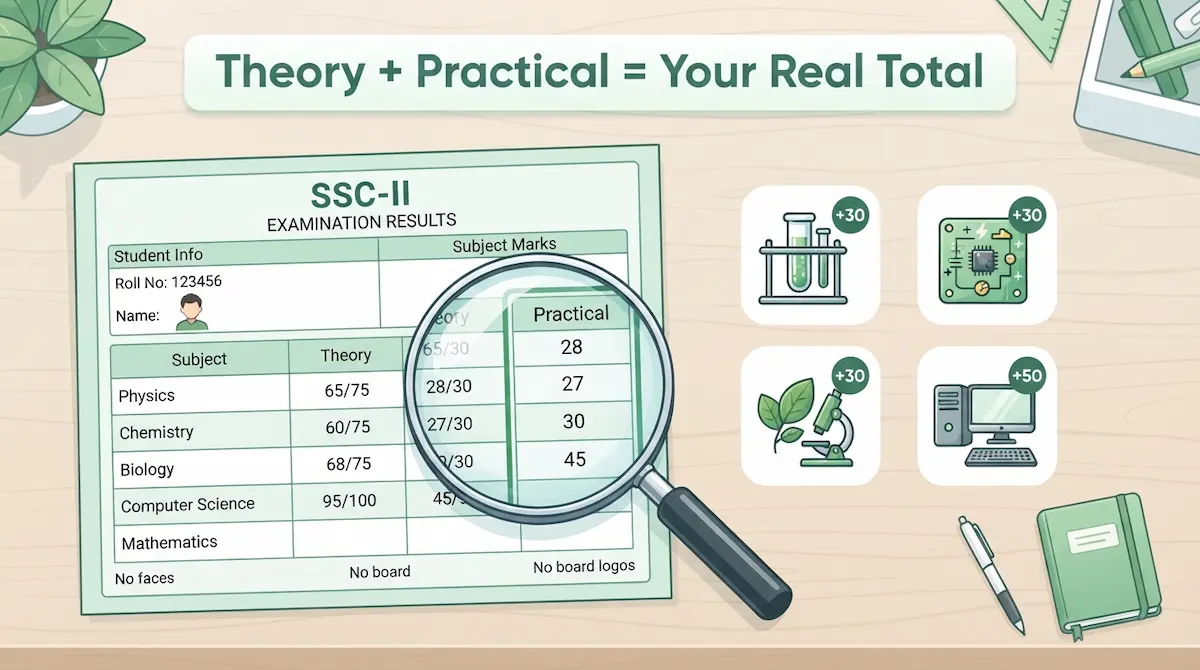
In the science group, four subjects carry practical marks: Physics, Chemistry, Biology, and Computer Science. The written (theory) paper is conducted each year in 9th and 10th class, while the practical examination is held once — during SSC Part 2 — and its marks cover the full matric practical component.
| Subject | Theory (9th) | Theory (10th) | Practical | Subject Total |
|---|---|---|---|---|
| Physics | 60 | 60 | 30 | 150 |
| Chemistry | 60 | 60 | 30 | 150 |
| Biology | 60 | 60 | 30 | 150 |
| Computer Science | 50 | 50 | 50 | 150 |
Notice the pattern: every science elective totals 150 marks across both years. Biology and Computer Science students end up with the same subject weight — the board simply distributes it differently. Computer Science has lighter theory papers but a heavier practical, which is why its lab exam matters far more than most students assume.
Compulsory subjects — Urdu, English, Mathematics, Islamiyat, and Pakistan Studies — carry no practical component. Their paper marks are their final marks.
Where Practical Marks Appear on Your Result Card
Your detailed marks certificate (DMC) and the board gazette show a separate practical column beside theory marks for each science subject. The subject total you see is theory plus practical combined — not theory alone. If you’re checking the gazette PDF, the “Pract.” column sits right before the subject total.
How Practicals Are Marked
The practical exam is not just performing an experiment. Examiners award marks across three areas: the experiment itself, your practical notebook (journal), and the viva voce — the oral questions asked while you work. A neat, complete notebook with correct observation tables protects marks that many students lose without realizing.
Why Some Students See Unexpected Totals
Three situations explain almost every “my marks look wrong” complaint on result day:
- You compared against the theory paper only. You expected around 45 in Chemistry based on how the written paper went, but the card shows 68. That gap is your practical marks being added on top. This works in your favour — most students score high in practicals.
- You skipped or missed the practical. The practical column shows a dash or zero, and the subject may show fail even if your theory marks were fine. Each subject must be cleared as a whole under board passing policy, and a missing practical drags the entire subject down.
- You forgot the total is out of 1100. Your matric aggregate combines SSC Part 1 and Part 2. Ninth class marks — announced a year ago — are carried into this final total. If your overall number feels low or high, check the Part 1 column before assuming an error. For college admission planning, run your combined marks through the merit calculator to see where you stand.
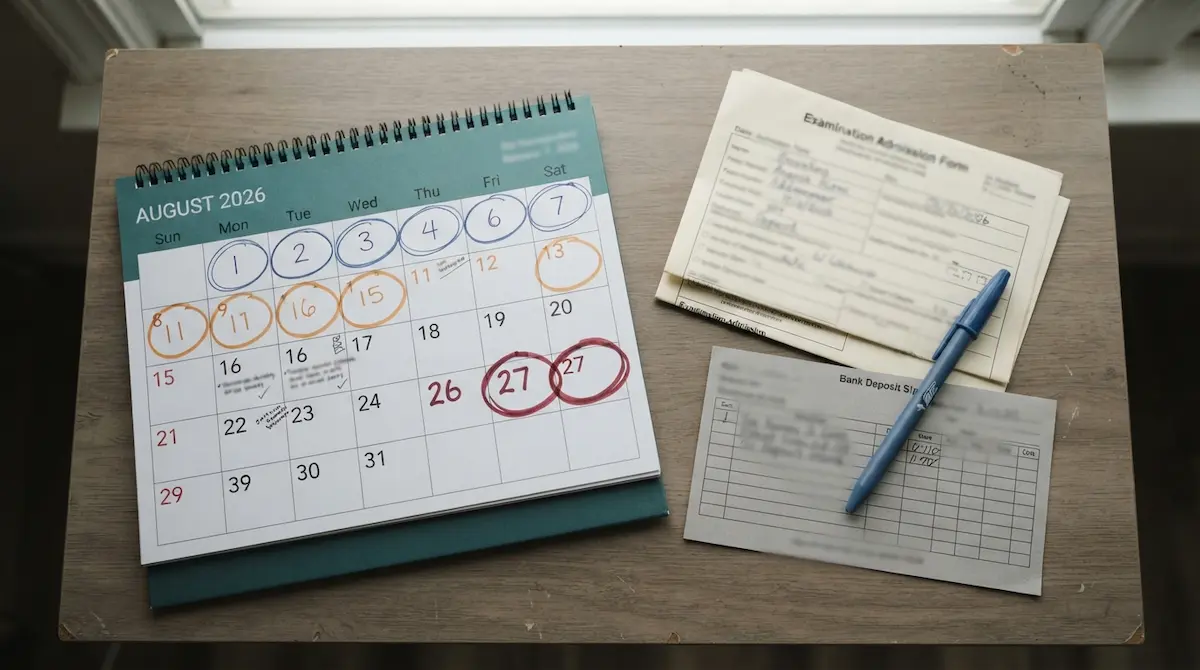
If the practical column itself looks genuinely wrong — marks missing despite appearing in the exam — apply for rechecking within 15 days of the announcement. The fee is Rs 1,200 per subject, and re-totaling errors in practical entries do get corrected.
The Bottom Line
Theory papers test what you know. Practicals test what you can do — and they carry real weight: 90 marks for a Biology-group student, 50 for Computer Science alone. Understand the split before result day, and your total will never surprise you.